Reviews
& Press : : Water Watch - A Community Action Guide
WATER
WATCH
A COMMUNITY ACTION GUIDE
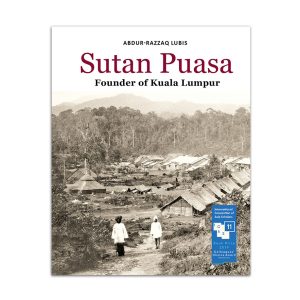
Compiled by Abdur-Razzaq Lubis
Asia-Pacific People's Environmental Network
Paperback, 96 pages
$ 9.00 US, £5.00 UK, $13.00 Australia, $9.00 Africa
ISBN: 9839941607
Reviewed
by Subir Ghosh
Till
taught by pain, man knows not water's worth. - Byron
If
you say "water" to an engineer, he thinks drainage,
pipes, money, energy - but not life. - Hermann Knoflacher
In
modern societies, water is taken for granted because it comes
out when one turns on the tap and is drained away after use..
It is only when a water crisis hits one that people become aware
of the maxim that "water is life."
Human
beings are becoming thirstier by the day, consuming five times
the amount of water today than 40 years ago. The average American
consumes on an average 200 gallons per day, while a rural Kenyan
might just use 1.3. Most people in the world would use no more
than 13 gallons per day. In other words, Americans consume between
10 and 100 times the amount of water consumed by other inhabitants
of the globe. Someone has even bothered to calculate the bizarre
fact that if all the 20 million waterbeds in the United States
were emptied, they would produce enough water to sustain a village
in India for more than a year.
Everywhere
in the world, household needs - drinking, washing and cooking
- can be adequately met by less than 100 litres per person per
day, roughly the amount used for an average shower. A hundred
litres a day is equivalent to about 35 cubic metres per person
per year. It requires 300 tonnes of water to grow an adequate
diet for human beings annually - nearly a tonne a day. Conventional
toilets use up to 2.5 gallons of water to flush. The average American
household drains away 107,000 gallons of water annually, mostly
from toilets and bathtubs. In any one year, a typical domestic
user contaminates 13,000 gallons of clean water to flush away
only 165 gallons of the body's wastes.
Water
also brings death. Polluted air and, of course, water causes more
deaths than any other environmental problem including asbestos,
dioxins and nuclear wastes. In the United States, over 10,000
organic chemicals are synthesised, traces of all of which find
their way, sooner or later, into rivers, streams, sewage treatment
plants and water supplies. Add to these 100,000 man-made chemicals,
5 million chemical compounds and up to 40 million research chemicals,
and what is left is a deadly concoction.
In
developing countries, the problem of water-borne diseases is getting
worse instead of better. Almost 80 per cent of diseases throughout
the world are water-related. There are 1.2 million people suffering
from diseases caused by drinking polluted water or transmitted
by inadequate sanitation. Water pollution is becoming a serious
threat to health, and even survival in many parts of Asia.
Of
the 37 diseases that have been identified as the major causes
of death in developing countries, 21 are water and sanitation
related. More than two million children under the age of five
in the third World die every year from drinking polluted water.
Water-borne diseases account for more than 4 million infant and
child deaths per year in developing countries. In just seven countries
of the region where conditions are at their worst, diarrhoeal
diseases alone kill 1.5 million children every year - which works
out to 3 children every minute. The diseases associated with dams
include schistomiasis (bilharzia), yellow fever, malaria, river
blindness (onchocerciasis) and liver fluke infections.

More
than 90 per cent of the world's water supply of drinkable water
is groundwater. Over-extraction of groundwater has resulted in
severe land subsidence in cities like Bangkok, Manila, Jakarta,
Shanghai and others. Much of the world's drinking water is pumped
from groundwater. Groundwater is often, but not invariably, less
contaminated than surfacewater. Groundwater is renewed much more
slowly than other water sources. Groundwater is renewed only once
in 1,400 years. In over a third of the countries in the Asia-Pacific
region, over-exploitation of groundwater has already caused problems
such as production losses, land subsidence, saltwater intrusions
and groundwater pollution.
Water
scarcity is a result of excessive use. A combination of increased
use and increased population produces water stress. The first
signs of water stress usually involve conflicts between different
types of water users, notably farmers, industry and urban population.
In the battle for water, it is cities, not farmers, that usually
win. Industry suffers next. Supplies of cooling water, and water
for household needs, are usually the last to be cut back.
Water
deprivation becomes more acute in the poor and slum areas of large
Asian cities. In many parts of Asia, 'water-stressed' city-dwellers
live without the minimum supply of water for their daily necessities.
Lack of convenient water supplies puts great stress on families
in developing countries. In most countries, the human population
is growing but water availability is not. Most of this growth
occurs in water-stressed countries.
Globally,
47 per cent of all land falls within international river basins,
and nearly 50 countries on four continents have more than three-quarters
of their total land in international river basins. As many as
214 basins are multinational. Almost 40 per cent of the world's
population lives in international river basins. Many water-scarce
regions share the basin of a major river system. Water resources
shared by a number of countries is a cause of international conflicts,
particularly in countries where water is scarce, and its use unregulated
by treaty. Shortages of freshwater sharpen economic and political
differences among countries, and contribute to increasingly unstable
perceptions of national security.
Water
Watch is a venture of journalist-activist Abdur-Razzaq Lubis for
the Asia-Pacific People's Environmental Network. Lubis compiles
water facts which everyone should know. He introduces the lay
persons to the water cycle and the essential role of wetlands,
and distils words of wisdom on water's central importance to life
and spirituality. He presents a step-by-step guide on how to map
out watersheds, how to conduct a field study and how to adopt
a stream. Lubis highlights simple projects that can be undertaken
by community-based organisations, youth and school groups.
There
is a lot that can be done. A five-minute shower, for instance,
with a standard shower head uses about 30 gallons; a low-flow
showerhead cuts that amount in half to 15 gallons. Brushing teeth
with the tap running uses 10 gallons of water; turning it off
between rinses uses half a gallon or less. Shaving with the water
on uses 20 gallons; filling a basin instead uses one. Eating habits
too matter. Agriculture is the largest user of water - accounting
for about 70 per ent of all withdrawn daily from aquifers in the
United States. Much of this water is used to produce meat. A single
pound of beef requires between 2,600 and 6,000 gallons of water;
a pound of wheat or potatoes uses only 25. Eating less or no meat
can contribute to significant water savings.
There
is more. Especially, about wetlands and watershed. But, let us
leave that for reading the actual book.